Why anxiety can wreck your sleep (and why it’s not “just in your head”)
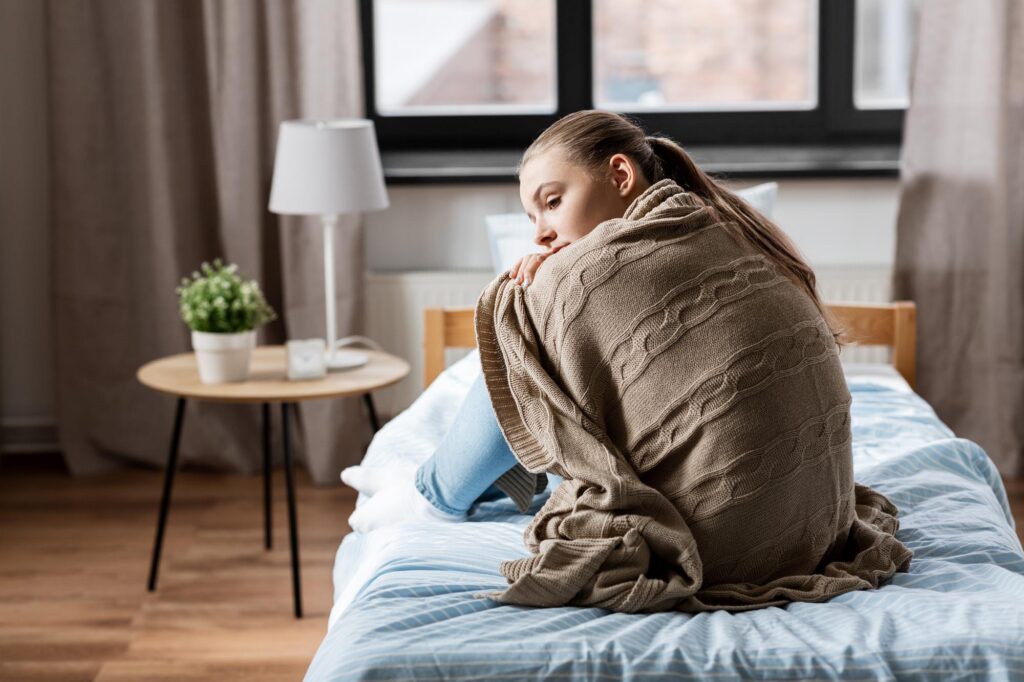
If you’ve ever had a night where your brain will not turn off, you’re not alone. You climb into bed exhausted, but suddenly your mind starts racing. Your shoulders feel tight. Your chest feels “on.” You drift off for an hour, then you’re wide awake at 3 a.m. with the same looping thoughts. That “tired but wired” feeling can be so frustrating, especially when you have work, parenting, school, or just life waiting for you in the morning.
This isn’t a character flaw and it isn’t weakness. Anxiety changes your body’s arousal system. When your nervous system is on high alert, sleep becomes harder to access, even when you desperately want it.
And the cycle can feed itself:
- Poor sleep makes your brain more reactive to stress the next day.
- Higher stress and anxiety make it harder to fall asleep and stay asleep at night.
On top of that, sleep problems can be connected to anxiety, substance use, withdrawal, or a mix of all three. This mix matters because the right solution depends on what’s really driving your insomnia.
In this article, we’re sharing four practical, dual-diagnosis friendly tips that support anxiety treatment and recovery. We’ll also cover when it’s time to get professional help, because sometimes sleeplessness is a sign your body needs more support than sleep “hacks” can offer.
For those struggling with substance use alongside anxiety, consider exploring Oasis Treatment Centers’ Evening IOP program, which integrates community support into recovery efforts.
What “dual diagnosis” means when you can’t sleep
“Dual diagnosis” refers to the simultaneous presence of a mental health condition (like anxiety) and a substance use disorder. This could involve substances such as alcohol, opioids, cocaine, prescription drugs, benzodiazepines, cannabis, stimulants, or a combination thereof. Understanding this concept is crucial because substances can significantly disrupt sleep.
For instance, some substances might initially sedate you while others keep you awake. However, over time, many substances tend to worsen sleep quality by disrupting sleep architecture, increasing nighttime awakenings, and potentially creating rebound anxiety.
Here are a few common patterns observed in those with dual diagnosis:
- Using alcohol to fall asleep, then waking up anxious a few hours later.
- Using cannabis or pills to “shut off” thoughts, resulting in grogginess or increased anxiety the next day.
- Using stimulants, which can lead to insomnia or shallow sleep.
- Using benzodiazepines, which may create dependence and worsen baseline anxiety over time.
The encouraging part is that when both anxiety and substance use are treated together through dual diagnosis treatment, sleep often stabilizes more quickly. While not always immediate, improvement is usually steady and leads to fewer anxiety spikes and cravings.
Tip #1: Treat the root cause
When faced with sleeplessness, it’s tempting to seek quick relief. However, in cases of dual diagnosis, the first step should be gaining clarity rather than pursuing perfect sleep hygiene.
Start with an honest self-assessment for anxiety treatment:
- What substances are you relying on (including “as needed” meds)?
- What time do you consume them?
- How does your body react on nights without them?
- Are you drinking just enough to fall asleep?
- Is your usage increasing over time?
This assessment is crucial because withdrawal and rebound effects can mimic anxiety insomnia – especially with alcohol and benzodiazepines. For example, while alcohol might help you fall asleep faster, it can lead to fragmented sleep as it wears off. Similarly, dependence on benzodiazepines can result in rebound anxiety and insomnia between doses.
To gain valuable insights quickly, consider tracking your sleep and symptoms for 7 days. Document the following:
- Bedtime and wake time
- Time taken to fall asleep
- Night awakenings (and their timing)
- Caffeine and nicotine consumption (what and when)
- Alcohol or drug use (what and when)
- Anxiety level (0 to 10) at bedtime and during the night
- Naps (time and length)
If you’re working with a professional, this tracking will provide concrete data for assessing your situation without guesswork. It allows for the identification of patterns that could indicate:
- An anxiety subtype like generalized anxiety, panic symptoms, or trauma-related hyperarousal
- Co-occurring depression (which can also disrupt sleep)
- Substance-related sleep disruption or withdrawal effects
Once these patterns are identified through personalized treatment, effective sleep strategies such as undergoing a [sleep study](https://my.clevelandclinic.org/
Tip #2: Use evidence-based therapy tools at night (CBT + CBT-I skills you can start tonight)
At Insight Recovery Treatment Center, we lean on tools that are both practical and proven. Cognitive Behavioral Therapy (CBT) is a cornerstone of anxiety treatment because it targets the thoughts and behaviors that keep anxiety going. When insomnia is part of the picture, CBT for Insomnia (CBT-I) skills can be especially helpful because they’re designed to reduce arousal and rebuild sleep confidence.
Here are a few insomnia-safe techniques you can try tonight.
1) Try “4-6 breathing” to downshift your nervous system
This is simple and effective when your body feels keyed up.
- Inhale through your nose for 4 seconds.
- Exhale slowly for 6 seconds.
- Repeat for 3 to 5 minutes.
Longer exhales signal safety to the body. If you notice yourself trying to force sleep, shift the goal to calming your body first. Sleep often follows.
2) Use the 5-4-3-2-1 grounding scan when thoughts spiral
This helps when your mind is stuck in future worries or worst-case scenarios.
- 5 things you can see
- 4 things you can feel (blanket, pillow, feet on the sheet)
- 3 things you can hear
- 2 things you can smell
- 1 thing you can taste
If your thoughts keep pulling you away, that’s okay. Just come back to the next item. You’re practicing control of attention, not trying to “win” against anxiety.
In addition to these techniques, it’s worth considering individual therapy as part of a broader anxiety treatment plan. This type of therapy not only addresses anxiety but can also be beneficial for those dealing with addiction issues.
Moreover, if you’re seeking a more comprehensive approach to anxiety treatment, holistic therapy could be another avenue worth exploring. This method treats the individual as a whole rather than just focusing on specific symptoms or behaviors.
For those who may need a more intensive level of care, such as those requiring detox and residential treatment, we offer programs that provide a structured environment conducive to recovery.
Lastly, if you’re looking for a more flexible anxiety treatment option, our Intensive Outpatient Program (IOP) might be suitable. This program allows individuals to continue their daily responsibilities while receiving the necessary treatment and support.
3) Do a “brain dump” earlier, not in bed
If your brain treats bedtime like an inbox, give it a better place to land.
- About 60 to 90 minutes before bed, write down everything that’s on your mind.
- Next to each item, write one tiny next step (or write “not solvable tonight”).
- Close the notebook and tell yourself, “This is parked for tomorrow.”
The goal isn’t perfect organization. It’s giving your brain permission to stop scanning for problems.
4) If you’re awake too long, change your location briefly
One CBT-I principle is to protect your bed as a cue for sleep (not stress). If you’ve been awake for what feels like 20 to 30 minutes, consider getting up and doing something quiet in dim light, like reading something calming. Return to bed when you feel sleepy again.
A few things to avoid, especially with dual diagnosis in the picture:
- Using alcohol or benzodiazepines to “chase sleep”
- Clock-watching (turn the clock away)
- Scrolling or doom-searching symptoms
- High-intensity workouts late at night
These therapy-based tools can also support relapse prevention. When cravings or anxiety fluctuate, having a non-substance way to ride out discomfort is a real form of protection.
Tip #3: Rebuild your sleep biology during anxiety treatment (without substituting one dependency for another)
If you’re in early recovery from substance abuse treatment, sleep can be rough for a while. That’s not you failing. It’s your nervous system recalibrating. Depending on the substance history, insomnia and vivid dreams can last days or weeks. The good news is that it’s common and treatable, and your sleep system can recover.
We often recommend a recovery-friendly sleep reset that supports anxiety treatment without creating a new dependency.
It’s also worth noting that individuals with conditions such as ADHD, AUDHD, or autism may benefit from implementing more neurodiversity-affirming sleep strategies. These compassionate self-care methods can greatly improve their sleep quality during recovery phases.
Create a simple wind-down routine with the same 3 steps nightly
Consistency matters more than complexity. Pick three steps you can repeat most nights, such as:
- Warm shower (signals downshift)
- 5 to 10 minutes of gentle stretching (releases tension)
- Reading something light (paper book if possible)
Doing the same sequence helps your brain associate the routine with safety, and safety is what an anxious nervous system needs in order to sleep.
Keep wake time steady, even if sleep is messy
A consistent wake time is one of the fastest ways to rebuild sleep drive. If you had a terrible night, it’s still okay to keep your wake time steady and take a short, early nap if needed. We can help you tailor this based on your schedule and recovery needs.
Medication safety, in a responsible and supportive way
Sometimes medication can be appropriate, especially when insomnia is severe and anxiety is intense. But with a history of opioid use, alcohol use, or benzodiazepine use, it’s especially important that sleep and anxiety anxiety treatment medications are prescribed and monitored. We strongly encourage avoiding self-medicating, borrowing meds, or mixing substances “just to get one night of sleep.” That can spiral quickly and can be dangerous.
In our programs, we focus on whole-person care that addresses the physical, emotional, and psychological drivers of addiction and anxiety. Sleep is part of the treatment plan, not an afterthought. For those struggling with addiction or severe anxiety, our california addiction treatment programs offer comprehensive solutions including intensive outpatient programs and partial hospitalization programs.
Tip #4: Build a dual-diagnosis relapse-prevention plan for nights when anxiety spikes
Nighttime can be a high-risk moment: you’re alone, you’re tired, your coping skills are depleted, and catastrophic thinking gets louder. Add cravings to the mix and it can feel like you’ll do anything for relief.
A plan helps because it reduces decision-making when your brain is stressed. Here’s a simple version you can copy and adapt.
Your nighttime plan (copy/paste and personalize)
1) Name what’s happening (30 seconds):
“This is anxiety plus exhaustion. My brain is loud because I’m tired. I don’t have to solve my whole life tonight.”
2) Do a quick environment reset (5 minutes):
- Remove substances from the home if possible, or ask someone you trust to help you make your space safer.
- Keep your bedroom for sleep, not scrolling or spiraling.
- If you can, charge your phone outside the bedroom. If you can’t, put it across the room.
3) Use one coping tool (10 minutes):
Choose one: 4-6 breathing, 5-4-3-2-1 grounding, a short walk in the hallway, a calming audio track, or reading a few pages of a familiar book.
4) If cravings rise, connect (even briefly):
Text a support person, use your recovery network, or write a short message you can send in the morning if it’s too late to contact someone. The point is to break the isolation loop.
5) Next-day repair (no shame spiral):
If the night was messy, the next day is about repair, not punishment: hydrate, eat something steady, get sunlight, take a short walk, and return to your routine. Then talk about what happened in therapy or group so it becomes a learning moment, not a secret.
Group support and aftercare planning can be powerful stabilizers here, especially when sleep is fragile. You deserve a plan that holds up on the hard nights, not just the easy ones. Incorporating strategies such as group therapy into your aftercare planning can provide additional support during these challenging times.
When sleepless anxiety is a sign you need a higher level of care
Sometimes insomnia is more than stress. It’s a signal that your system needs structured support. We encourage reaching out for professional help if you notice:
- Panic attacks at night or fear of going to sleep
- Using alcohol or drugs to sleep, even “sometimes”
- Escalating doses (needing more to get the same effect)
- Withdrawal symptoms (shaking, sweating, nausea, agitation, rebound anxiety)
- Missing work, school, or parenting responsibilities due to exhaustion
- Depressed mood, hopelessness, or feeling emotionally unsafe
- Thoughts of self-harm or not wanting to be here
If alcohol, benzodiazepines, or opioids are involved, medical supervision for detox can be important for both safety and comfort. And in many cases, effective anxiety treatment works best with coordinated care that may include therapy, skills training, medication management when appropriate, and recovery supports.
How we help you sleep again while treating anxiety and addiction together
At Insight Recovery Treatment Center, we believe recovery is personal. We build treatment plans around you, not a template. If anxiety and substance use are both affecting your sleep, we focus on stabilizing the whole system.
Depending on your needs, support may include:
- A thorough assessment to understand anxiety symptoms from our anxiety details, substance use patterns, and sleep disruption
- Individual therapy using CBT and other evidence-based approaches
- Group sessions that build coping skills, connection, and real-life relapse prevention strategies
- Behavioral therapy tools that support both anxiety regulation and sleep consistency
- Relapse prevention planning for high-risk times like nighttime and early recovery
- Aftercare planning plus ongoing support through continued services and community connection
We also support substance-specific needs in a thoughtful way. For example, opioid treatment may include medication-assisted treatment (MAT) plus counseling. Benzodiazepine support may involve structured tapering plans along with stress management and behavioral therapies. Alcohol recovery often includes CBT, skills training, and support groups, with sleep stabilization as a key goal.
Better sleep isn’t a luxury. It’s a treatment target. When sleep steadies, anxiety becomes more manageable – as detailed in our anxiety treatment page – cravings often soften, and recovery feels more sustainable.
In some cases where co-occurring disorders are present such as anxiety and substance use disorder – dual diagnosis treatment becomes essential. This integrated approach is crucial for successful recovery as it addresses both mental health issues and addiction simultaneously.
Let’s wrap up (and take the next step)
If anxiety is stealing your sleep, the most helpful path is usually a combined one: screen for the root cause (including substance use and withdrawal), use CBT and CBT-I tools at night, rebuild sleep biology in recovery without replacing one dependency with another, and create a relapse-prevention plan for anxiety spikes after dark. Progress can be uneven, so if you’ve had a few better nights followed by a rough one, that doesn’t mean you’re back at square one. It often means your nervous system is still learning safety.
If you want support sorting out what’s driving your insomnia and building a plan that treats anxiety and addiction together, we’re here. Call Insight Recovery Treatment Center at (781) 653-6598 to talk through what you’re experiencing and schedule a consultation.